
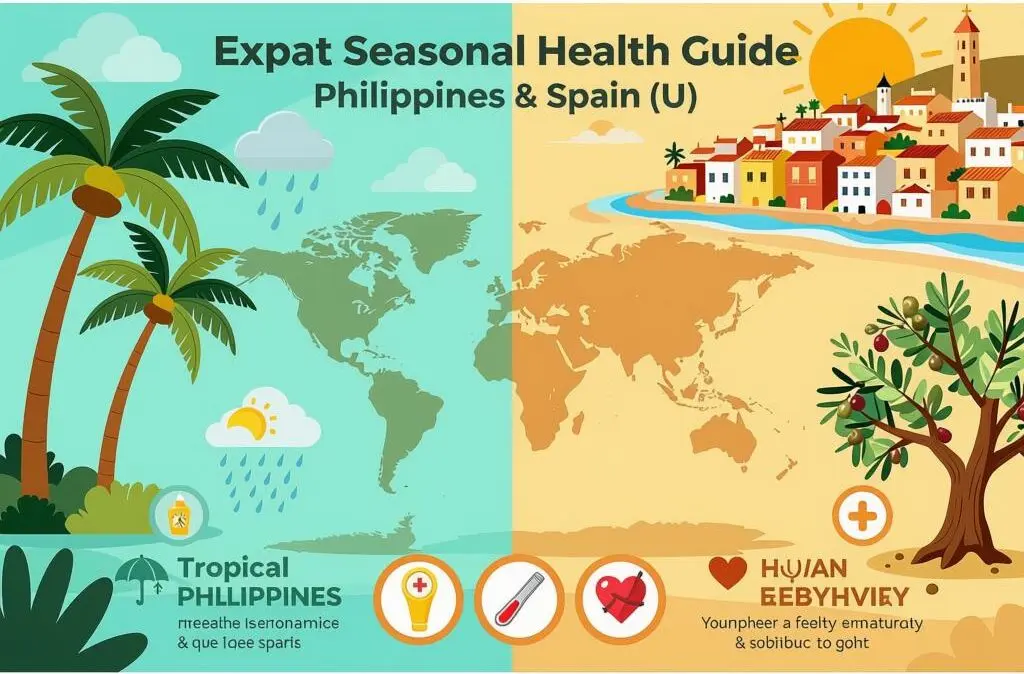
What you can do to stay healthy.
Moving abroad is exciting—but adapting to new climates and healthcare systems takes preparation. For expats living in tropical Southeast Asia or Mediterranean Europe, understanding seasonal health risks is essential for long-term wellbeing. Whether you’re navigating Manila’s monsoon rains or Barcelona’s summer heatwaves, this guide covers everything you need to stay healthy year-round.
Why Seasonal Awareness Matters for Expats
As an expat, your body isn’t acclimatized to local weather patterns the way it was at home. What locals manage easily may pose genuine risks to newcomers. Beyond physical adjustment, you’ll face unfamiliar pathogens, different allergens, and healthcare systems you may not yet know how to navigate. Being proactive about seasonal health gives you control over your wellbeing—and prevents avoidable medical emergencies far from home.
Seasonal Health in the Philippines: Tropical Challenges
The Philippines experiences two primary seasons—wet and dry—each bringing distinct health considerations.
Dry Season (November to April): Beat the Heat
During these months, especially March and April when temperatures reach 34°C+, heat-related illnesses become a serious concern. Common issues include heat exhaustion, dehydration, and severe sunburn.
Action Steps:
- Hydrate strategically: Drink clean water consistently throughout the day. Consider electrolyte solutions during outdoor activities.
- Time your outdoor exposure: Limit strenuous activity to early morning or late evening when UV intensity drops.
- Protect your skin: Apply broad-spectrum sunscreen and wear lightweight, loose-fitting clothing. Air conditioning creates additional dryness—keep moisturizer handy.
- Monitor air quality: Pollution worsens during the dry season. Use fans or air-conditioners to maintain indoor air quality, avoiding smoky environments.
Note: The western Visayas region remains relatively sheltered from extreme conditions throughout the year—a consideration if climate sensitivity affects your health choices.
Wet Season (May to October): Combat Vector-Borne Risks
Monsoon rains transform the landscape—and disease risk profiles. Waterborne pathogens and mosquito-borne viruses spike dramatically during these months.
Primary Concerns: Dengue fever, chikungunya, leptospirosis, and typhoon-related injuries.
Action Steps:
- Water and food safety: Wash fruits and vegetables thoroughly. Drink only treated or boiled water. Exercise caution with street food, which carries contamination risks during heavy rains.
- Mosquito prevention: Apply insect repellent containing DEET or picaridin. Wear long sleeves even during daylight hours—dengue-transmitting mosquitoes bite actively during daytime.
- Home maintenance: Eliminate standing water where mosquitoes breed. Clean gutters regularly and ensure proper drainage around your residence.
- Typhoon preparedness: Have an emergency kit ready with supplies for several days. Monitor PAGASA weather alerts closely, as flooding poses injury and respiratory infection risks (particularly mold exposure afterward).
Seasonal Health in Spain: Mediterranean Extremes
Spain’s climate varies by region but generally features hot summers, mild winters, and pronounced allergy seasons. As an expat, three seasonal threats dominate: heat waves, pollen allergies, and winter respiratory infections.
Summer Heat Waves (June–September)
Spanish summers are becoming increasingly intense due to climate change. Heat-wave mortality remains a serious public health priority in the country.
Protection Strategies:
- Heed official heat-wave alerts issued with geographic precision—these indicate elevated risk areas.
- Avoid outdoor exertion between 10 AM and 4 PM when UV radiation peaks.
- Stay hydrated continuously, not just when thirsty. Electrolyte drinks help replenish minerals lost through sweating.
- Create cooling zones at home with fans, shutters, and strategic ventilation during cooler nighttime hours.
- Vulnerable groups—including seniors, those with cardiovascular conditions, and pregnant individuals—should seek clinical guidance before prolonged heat exposure.
Spring Allergies (March–July)
Longer, hotter springs intensify pollen seasons. Grass and tree pollen levels in Spain are notably high, affecting many newcomers unaccustomed to Mediterranean flora.
Management Tactics:
- Check daily pollen counts via local apps or websites like the Spanish National Immunization Committee resources.
- Keep windows closed on high-pollen mornings and use air purifiers indoors.
- Shower and change clothes after spending time outdoors to remove airborne particles.
- Consult physicians about antihistamines, nasal corticosteroids, or immunotherapy options if symptoms persist beyond typical adaptation periods.
Winter Months (October–February): Respiratory Health Focus
While Spain’s winters remain temperate compared to Northern Europe, viral circulation increases as people congregate indoors.
Immune-Supporting Habits:
- Receive annual influenza vaccination through regional health services—essential for establishing care networks locally.
- Maintain hand hygiene rigorously; alcohol-based sanitizers should accompany you during commutes and shopping trips.
- Ensure adequate Vitamin D intake through supplementation, especially during shorter days when sunlight exposure decreases. Many Spaniards experience deficiency despite their sunny reputation.
- Moderate indoor humidity to prevent mold and dust mite proliferation. Dehumidifiers or proper ventilation help maintain 40–60% relative humidity levels ideal for respiratory health.
Navigating Healthcare Systems: Practical Advice for Both Countries
Understanding local healthcare infrastructure is as critical as seasonal awareness itself.
Philippines: Private Care Prevails for Expats
Most foreign residents rely on private hospitals rather than public facilities due to wait times and English-language service availability. Major cities like Manila and Cebu offer internationally accredited medical centers with advanced equipment. Secure international health insurance covering direct billing arrangements with recognized networks before arrival. Verify policy terms regarding pre-existing conditions well in advance.
Spain: Mixed Public/Private Coverage Landscape
Spain boasts one of the world’s highest life expectancies (~83 years), reflecting exceptional healthcare quality. EU citizens and long-term residents qualify for public coverage. Non-EU expats often require private or international insurance plans (Allianz, AXA, Cigna Global) until residency status grants public access. Travel insurance doesn’t substitute for comprehensive expat health coverage—it serves emergency-only purposes versus routine care. Confirm whether your policy uses reimbursement claims or direct provider payment systems.
Final Thoughts: Adaptation Takes Time
Adjusting to any new climate demands patience alongside preparation. Give yourself permission to learn incrementally what works for your body. Build relationships with local practitioners who understand regional health patterns. Track seasonal symptom changes across your first full year abroad—you’ll develop nuanced intuition faster than expected.
With informed vigilance and appropriate precautions, thriving as an expat becomes entirely achievable regardless of your destination’s weather challenges. Your health journey abroad deserves thoughtful planning from day one.
Stay safe, stay adaptable, and embrace your new environment—one season at a time.

 English
  English (UK)
  Español
  Español de Colombia
  Español de Venezuela
  Tagalog
  العربية
  Italiano
  हिन्दी
  한국어
한국어  日本語
日本語  简体中文
简体中文  香港中文
香港中文  繁體中文
繁體中文